
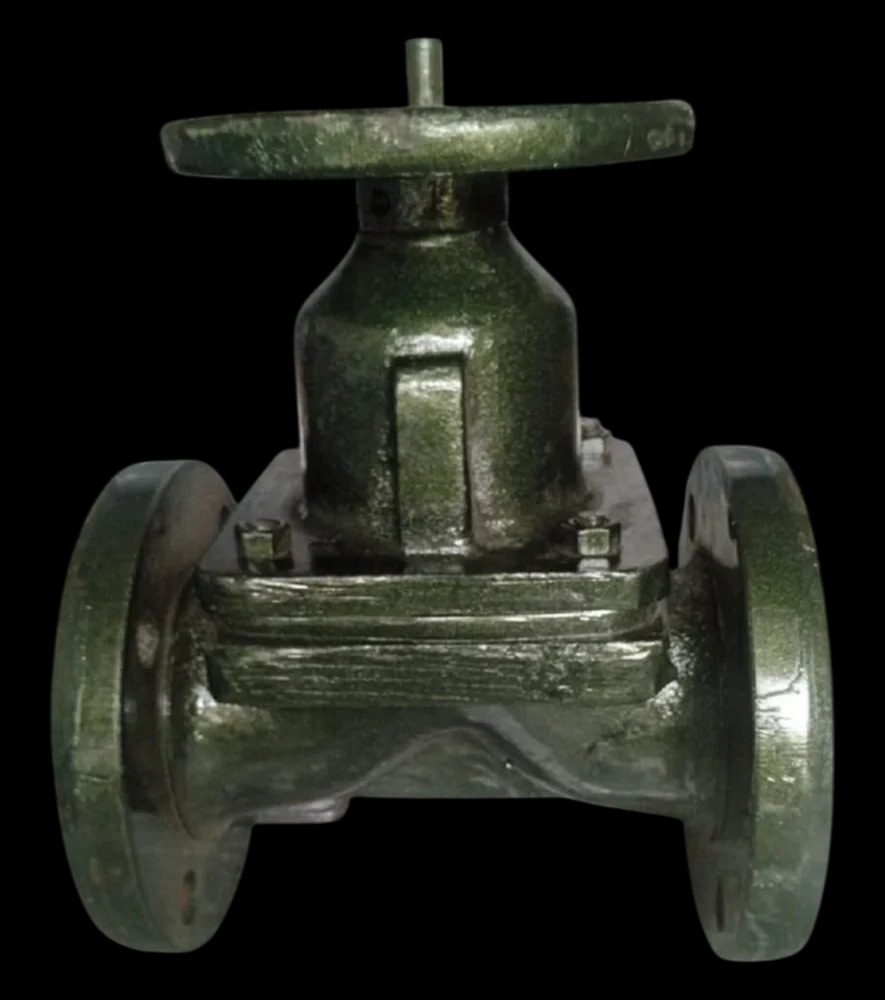
A diaphragm valve is a linear motion valve used to start, regulate, and stop fluid flow. Its defining feature is a flexible disk (the diaphragm) that seats against a weir or a flow passage to create a leak-proof seal. Why They Are Chosen (The 'Selling Points') Total Isolation: The operating mechanism is completely isolated from the process fluid, preventing contamination and corrosion of the valve stem. Leak-Proof Sealing: Ideal for hazardous or expensive fluids where 'zero leakage' is a safety requirement. Ease of Maintenance: The diaphragm is a wear part that can be replaced without removing the valve body from the pipeline. Primary Industrial Applications 1. Biopharmaceutical & Food Processing In these industries, hygiene is non-negotiable. Usage: Used in high-purity water systems (WFI) and fermentation lines. Why: The smooth internal body prevents 'dead legs' where bacteria can grow. They are easily sterilized via CIP (Clean-in-Place) or SIP (Steam-in-Place) cycles. 2. Chemical Processing & Corrosive Media Standard metal valves fail quickly when handling sulfuric acid or caustic soda. Usage: Transporting aggressive chemicals or abrasive slurries. Why: The valve body can be lined with materials like PFA, ETFE, or Glass, while the diaphragm (often PTFE or EPDM) acts as a sacrificial, easily replaceable barrier. 3. Water Treatment & Power Generation Usage: Demineralization plants and ion exchange systems. Why: Diaphragm valves handle the 'dirty' fluids of water treatment (resins and chemicals) without clogging or seizing.


This is your website preview.
Currently it only shows your basic business info. Start adding relevant business details such as description, images and products or services to gain your customers attention by using Boost 360 android app / iOS App / web portal.
Diaphragm Valve Specification and Industrial Application, K-TECH FLUID CONTROLS, Gujarat, India.
2026-05-13T07:15:59
A diaphragm valve is a linear motion valve used to start, regulate, and stop fluid flow. Its defining feature is a flexible disk (the diaphragm) that seats against a weir or a flow passage to create a leak-proof seal. Why They Are Chosen (The 'Selling Points') Total Isolation: The operating mechanism is completely isolated from the process fluid, preventing contamination and corrosion of the valve stem. Leak-Proof Sealing: Ideal for hazardous or expensive fluids where 'zero leakage' is a safety requirement. Ease of Maintenance: The diaphragm is a wear part that can be replaced without removing the valve body from the pipeline. Primary Industrial Applications 1. Biopharmaceutical & Food Processing In these industries, hygiene is non-negotiable. Usage: Used in high-purity water systems (WFI) and fermentation lines. Why: The smooth internal body prevents 'dead legs' where bacteria can grow. They are easily sterilized via CIP (Clean-in-Place) or SIP (Steam-in-Place) cycles. 2. Chemical Processing & Corrosive Media Standard metal valves fail quickly when handling sulfuric acid or caustic soda. Usage: Transporting aggressive chemicals or abrasive slurries. Why: The valve body can be lined with materials like PFA, ETFE, or Glass, while the diaphragm (often PTFE or EPDM) acts as a sacrificial, easily replaceable barrier. 3. Water Treatment & Power Generation Usage: Demineralization plants and ion exchange systems. Why: Diaphragm valves handle the 'dirty' fluids of water treatment (resins and chemicals) without clogging or seizing.
2026-05-13T07:15:59


Keywords
- Diaphragm Valve Exporters in Kenya
- Diaphragm Valve Supplier in Africa
- CI Diaphragm Valve Manufacturer in Karnataka
- Diaphragm Valve Exporters from India.
- Diaphragm Valve Manufacturer in Gujarat
- diaphragm valve specifications
- K-TECH FLUID CONTROLS Gujarat
- biopharmaceutical diaphragm valve applications
- CIP SIP diaphragm valve usage
- zero leakage diaphragm valve India
Submit Your Enquiry